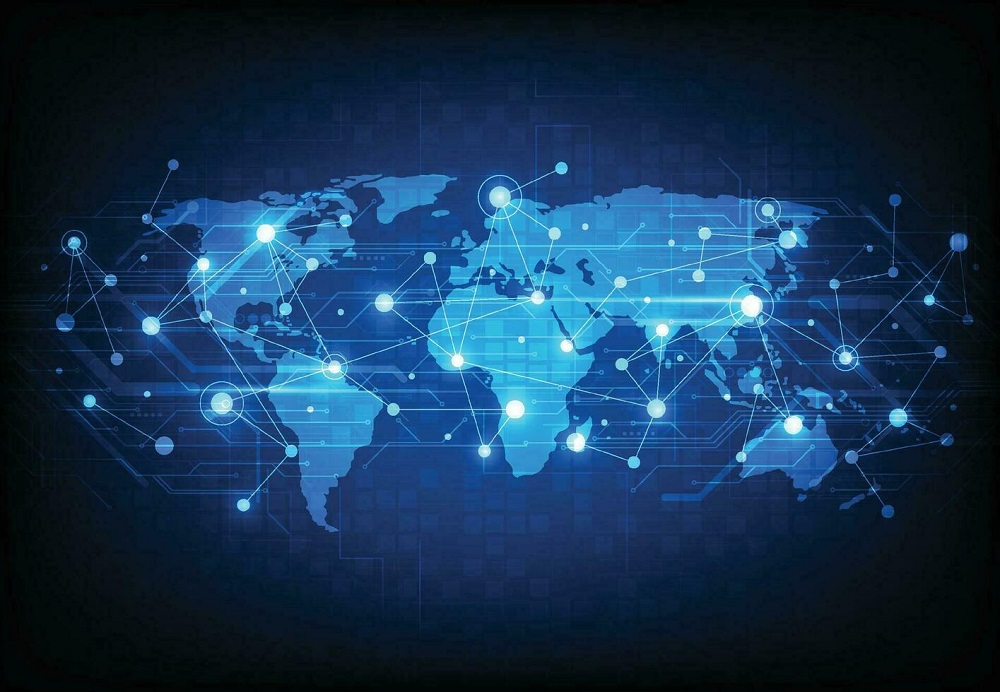
The internet is arguably the most significant technological achievement of the modern era. What began as a niche military research project has transformed into a universal utility that underpins global commerce, social interaction, and the storage of human knowledge. To understand the internet is to understand a complex web of protocols, hardware, and social shifts that have redefined how the human species operates on a daily basis.
The Genesis of Connectivity: From ARPANET to TCP/IP
The origins of the internet trace back to the late 1960s with the Advanced Research Projects Agency Network, or ARPANET. Funded by the United States Department of Defense, ARPANET was designed to allow researchers to share computer resources across great distances. The primary innovation during this era was packet switching, a method of grouping data into small units called packets. Unlike traditional circuit-switching used in telephone lines, packet switching allowed for more efficient and resilient data transmission.
By the early 1980s, the development of the Transmission Control Protocol and Internet Protocol (TCP/IP) provided a standardized language for different networks to communicate. On January 1, 1983, ARPANET officially adopted TCP/IP, marking the birth of the modern internet. This transition allowed for a “network of networks,” where independent systems could interconnect without requiring a centralized authority.
The Physical Infrastructure: How Data Travels the Globe
While many perceive the internet as an ethereal “cloud,” it is rooted in a massive physical infrastructure. Data does not move through the air for the majority of its journey; instead, it travels through an intricate system of cables and hardware.
-
Subsea Fiber Optic Cables: These cables are the backbone of international connectivity. Thousands of miles of glass fibers, no thicker than a human hair, lie on the ocean floor, carrying data across continents at the speed of light using laser pulses.
-
Data Centers: These are the “brain” of the internet. Massive warehouses filled with thousands of servers store the websites, applications, and databases that users access daily.
-
Internet Exchange Points (IXPs): These physical locations are where different Internet Service Providers (ISPs) and content delivery networks connect with one another to exchange traffic.
-
The Last Mile: This refers to the final leg of the journey from the ISP to the end user. This is achieved through fiber optics, coaxial cables, or wireless technologies like 5G and satellite.
The World Wide Web vs. The Internet
A common misconception is that the internet and the World Wide Web are the same thing. In reality, the internet is the underlying infrastructure—the tracks, signals, and stations—while the World Wide Web is one of many applications that run on those tracks.
Invented by Sir Tim Berners-Lee in 1989, the Web introduced the Hypertext Transfer Protocol (HTTP) and the use of browsers to navigate documents. Other services that run on the internet but are not part of the Web include email (SMTP), file transfers (FTP), and voice over IP (VoIP) services like digital telephony. The Web popularized the internet by making it accessible to non-technical users through a graphical interface.
The Economic Impact of a Connected World
The internet has fundamentally altered the global economy by lowering the barriers to entry for businesses and creating entirely new industries. Digital commerce, or e-commerce, has shifted the retail landscape, allowing small businesses to reach a global audience without the need for physical storefronts in every city.
Furthermore, the “gig economy” and remote work have decoupled employment from geography. Companies can now source talent from anywhere in the world, while employees benefit from increased flexibility. However, this shift has also led to challenges, including the displacement of traditional brick-and-mortar businesses and concerns regarding digital labor rights.
Cybersecurity and the Privacy Paradigm
As the internet became central to life, it also became a primary target for malicious actors. Cybersecurity is now a critical concern for governments, corporations, and individuals alike. The threats range from simple phishing scams to sophisticated state-sponsored cyber warfare.
Encryption has become the primary defense in this landscape. Technologies like Transport Layer Security (TLS) ensure that data sent between a user and a server remains private and untampered. Despite these protections, the massive collection of personal data by large platforms has sparked a global debate over privacy. Regulations such as the General Data Protection Regulation (GDPR) in Europe represent an attempt to give individuals more control over their digital footprints.
The Digital Divide and Global Accessibility
Despite its near-ubiquity in developed nations, a significant portion of the global population remains offline. This “digital divide” is often a result of economic disparity, lack of infrastructure, or political censorship. In many developing regions, mobile internet is the primary means of access, skipping the landline phase entirely.
Efforts to bridge this gap include low-Earth orbit satellite constellations, which aim to provide high-speed internet to remote areas where laying fiber optic cable is not economically viable. Closing the digital divide is seen by many international organizations as a human rights priority, as internet access is now essential for education, healthcare, and political participation.
The Future: Artificial Intelligence and the Internet of Things
The internet is currently undergoing another major evolution driven by two primary forces: the Internet of Things (IoT) and Artificial Intelligence (AI).
The IoT refers to the billions of physical devices—from refrigerators to industrial sensors—that are now connected to the internet. This creates a massive influx of data that allows for “smart” cities and more efficient supply chains. Simultaneously, AI is changing how we interact with the internet. Search engines are moving from providing a list of links to generating direct answers, and personalized algorithms determine the content we consume.
As we move toward a more integrated digital existence, the challenges of data management and ethical AI use will define the next decade of internet development. The goal remains a decentralized, open, and secure network that serves all of humanity.
Frequently Asked Questions
What is the role of the Domain Name System (DNS) in internet browsing?
The Domain Name System acts as the phonebook of the internet. Computers communicate using numerical IP addresses, but humans find it easier to remember names like google.com. When you type a URL into your browser, the DNS translates that human-readable name into the specific IP address of the server where the website is hosted, allowing your computer to find the correct destination.
How does Net Neutrality affect the average internet user?
Net Neutrality is the principle that Internet Service Providers should treat all data on the internet equally. This means they cannot intentionally block, slow down, or charge more for specific websites or online content. Without Net Neutrality, an ISP could potentially favor its own streaming service over a competitor or create “fast lanes” for companies willing to pay more, which could limit consumer choice and innovation.
What is the difference between the Deep Web and the Dark Web?
The Deep Web refers to any part of the internet that is not indexed by standard search engines. This includes private databases, email inboxes, and password-protected bank portals. The Dark Web is a small subset of the Deep Web that is intentionally hidden and requires specific software, such as Tor, to access. While often associated with illegal activity, the Dark Web is also used by journalists and whistleblowers to communicate anonymously in oppressive regimes.
Why is the world transitioning from IPv4 to IPv6?
IPv4 uses a 32-bit addressing scheme, which allows for approximately 4.3 billion unique IP addresses. Due to the massive explosion of connected devices, the world has officially run out of these addresses. IPv6 uses a 128-bit scheme, providing an almost infinite number of addresses (340 undecillion). This transition is necessary to support the continued growth of the Internet of Things and global connectivity.
How do Content Delivery Networks (CDNs) speed up the internet?
A Content Delivery Network is a system of distributed servers that deliver web content to users based on their geographic location. Instead of every user in the world requesting data from a single central server in New York, a CDN stores a copy of that data on servers located in various cities globally. This reduces latency, as the data has a shorter distance to travel to reach the user.
What is Edge Computing and how does it relate to the internet?
Edge computing is a distributed computing paradigm that brings data storage and processing closer to the location where it is needed, rather than relying on a central cloud-based server. This is particularly important for applications requiring real-time responses, such as autonomous vehicles or remote surgery, where even the millisecond delays of traditional internet routing could be dangerous.
Can the internet be truly “turned off” globally?
Due to its decentralized nature, there is no single “off switch” for the entire internet. The network is composed of millions of independent routers and servers. While individual countries can shut down their local gateways or sever international cables to isolate themselves, the global network is designed to route around failures. A total global shutdown would require the simultaneous destruction of thousands of independent infrastructure points across every continent and ocean.
