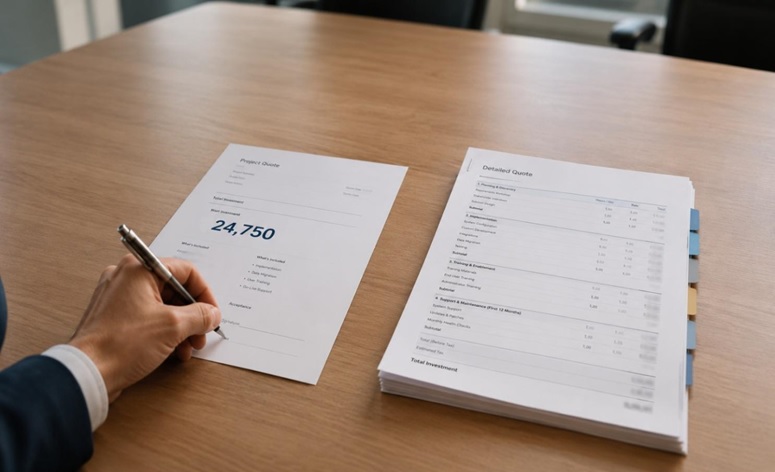
TL;DR: Cheap speech data sends you four invoices the quote never shows: an accuracy bill, a rework bill, a launch delay bill, and a compliance bill. Teams that buy verified multilingual speech data collection services upfront pay once. Teams that buy scraped or generic audio pay twice, then pay again in lost markets. This guide prices each hidden bill and shows you how to make the case for doing it right the first time.
What does cheap ASR data really cost? Low quality speech data typically costs two to four times its purchase price in downstream fixes. Word error rates climb for underrepresented accents, teams end up collecting the same data again, launches slip by months, and scraped audio creates consent liability. Verified collection costs more per hour and less per project.
Picture a procurement meeting. Two quotes sit on the table for the same speech project. One vendor wants a premium rate per recorded hour. The other charges a fraction of that. The cheap quote wins, everyone congratulates the budget owner, and the project kicks off in a good mood.
Six months later the model misses one word in five for anyone who speaks outside the majority accent. Support tickets stack up. The data team quietly opens a second purchase request, and this time nobody celebrates.
I have sat in both versions of that meeting. The pattern repeats because the true cost of speech audio hides below the sticker price, and nobody prices the invisible part. So this article prices it for you. We will go through the four bills cheap audio sends you after signing, then build the comparison framework you need to defend proper multilingual speech data collection services in front of a finance team. ML leads, product owners, founders shipping voice features into more than one language: this one is for you.
Why the Cheap Quote Wins Meetings and Loses Products
Per hour pricing flattens everything. Speaker vetting, demographic quotas, transcription review, consent paperwork: all of it compresses into one number, and the quote never tells you which of those items got skipped to hit that number. A low rate is not a discount. It is a list of missing line items wearing a price tag.
Cheap audio usually comes from one of three places. Scraped public recordings, which arrive with unknown consent and messy transcripts. Generic marketplace corpora, which covers majority accents and little else. Or crowd recordings without native review, where the audio exists but no qualified person ever checked the transcripts against it. All three produce speech recognition training data in name only.
Here is a five minute test that exposes a hollow quote. Ask the vendor to split the rate into collection, quality review, and consent management. A serious provider answers within a day. A reseller of scraped audio changes the subject. The silence tells you everything about what sits behind the price.
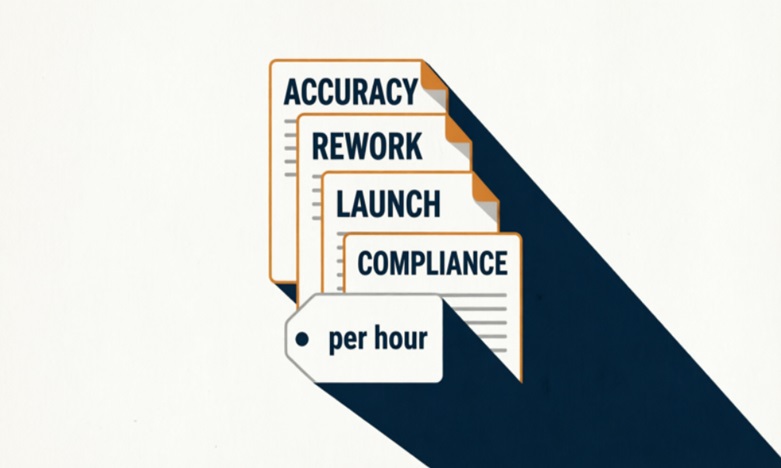
The Accuracy Bill: Error Rates That Compound Per Language
The first invoice arrives as model performance, and it hits your weakest covered language hardest.
Accent and dialect gaps show up as customer churn
Budget corpora lean hard on majority accent speakers because those recordings cost the least to source. Your users do not sound like that. When a model trained on narrow audio meets real speakers, error rates climb for everyone the dataset ignores. One wrong word in five sounds survivable until you watch a person repeat a command three times and give up. That person files no bug report. They just stop using the feature, and churn books the loss for you. The requirements guide for speech recognition training data on our blog breaks down the speaker diversity targets that prevent this.
Code switching breaks models trained on tidy audio
Real people mix languages mid sentence. A shopper in a Global South market moves between two languages inside one request without noticing. A contact center runs on mixed-language speech in a low-resource language pair all day. Corpora recorded one language per session and never taught a model this behavior, so the model treats the most natural speech in your market as noise. In multilingual regions, mixed speech is the main road, not the edge case. An asr dataset built from single language sessions leaves that road unpaved, and this guide shows what parallel and code switched corpora look like when built properly.
Studio audio, street deployment
Clean booth recordings train models that fall apart in kitchens, cars, and crowded shops. Device gap, distance gap, noise gap: every mismatch between training audio and production audio adds errors. The fix costs nothing at commissioning time. Pull the audio profile of your production environment first, then set acceptance conditions that match it. Teams skip this step constantly, and the accuracy bill collects the difference.
The Rework Bill: Paying for the Same Data Twice
Patching a weak corpus costs more than commissioning a sound one. Count the cycles. You run a gap analysis to find what the data missed. You commission a targeted second collection round. You annotate the new audio, retrain, and rerun every evaluation. Each cycle carries vendor fees, engineering time, and calendar weeks. And the original cheap purchase sits under all of it like a bad foundation under a new floor.
Annotation debt makes it worse. Transcripts that never passed native speaker review carry silent errors straight into training. The model plateaus, nobody can explain the plateau, and the team burns a quarter probing architecture when the transcripts were wrong the whole time. There is a reason careful teams treat 1,000 hours of clean, in domain speech recognition training data as worth more than 100,000 generic hours. Quality compounds. So do errors.
A workable budget rule: give quality review its own line item at ten to twenty percent of collection spend, written in on day one. If review has no line item, review will not happen, and the rework bill will introduce itself later.
The Launch Bill: Months of Market You Never Get Back
Every second collection cycle pushes a launch window. Push it twice and a competitor ships your roadmap in the market you researched. First mover loss never appears in a spreadsheet, because nobody invoices you for a market you failed to enter. It is the largest bill of the four and the only one finance never sees.
There is an internal version too. Engineers hired to build products spend their sprints firefighting data instead. Morale dips, roadmaps slip, and the opportunity costs compounds quietly.
Now flip it. Picture shipping every target language on one timeline because the corpus covered accents, environments, and mixed speech from the start. Recent open dataset work points the same direction: curated multilingual corpora reached target accuracy with roughly half the training hours of noisier alternatives. Better data is not just safer. It is faster. That version of the story costs more per hour and less per year.
The Compliance Bill: Consent Is Not Optional Audio Metadata
Voice is not ordinary data. A recording of someone speaking can identify them, which pulls it under biometric and personal data rules in the EU, several Asian markets, and a growing list of jurisdictions. Consent, provenance, and deletion rights stop being paperwork and become product requirements.
Scraped audio fails this test by design. Nobody can produce the consent chain, because no consent ever existed. The risk rarely lands as a fine first. It lands during enterprise procurement or acquisition diligence, when a buyer asks where the training audio came from and the honest answer kills the deal.
Ask any dataset supplier three questions before signing. Who recorded this audio, and did they agree to this use? Can you show the consent record per speaker? What happens when a speaker withdraws? Three clean answers cost a supplier nothing if the answers exist.
What a Verified Multilingual Speech Data Pipeline Actually Includes
So what does the bigger quote buy? Five things, and each one cancels a bill above. Recruited, consent verified native speakers settle the compliance bill before it opens. Demographic and accent quotas per language attack the accuracy bill at its source. Recording specs drawn from real environments close the studio to a street gap. Native transcribers with layered review keep annotation debt out of your training set. And documented provenance survives due diligence. That bundle is what a full multilingual speech data pipeline means when the words carry their full weight.
This is how Humyn Labs runs the full pipeline: sourcing, validation, multi-layer QC, annotation, and human-in-the-loop review, delivered through a verified first-party contributor network rather than an open crowd. For the business, that means one well-run pipeline cycle, launch dates that hold, and provenance you can hand an auditor. For practitioners, it means evaluation gains that stick and no mystery plateaus. The wider picture of what production audio requires sits in the Humyn Labs voice and audio data guide.
Build the Business Case: Price per Hour vs Price per Outcome
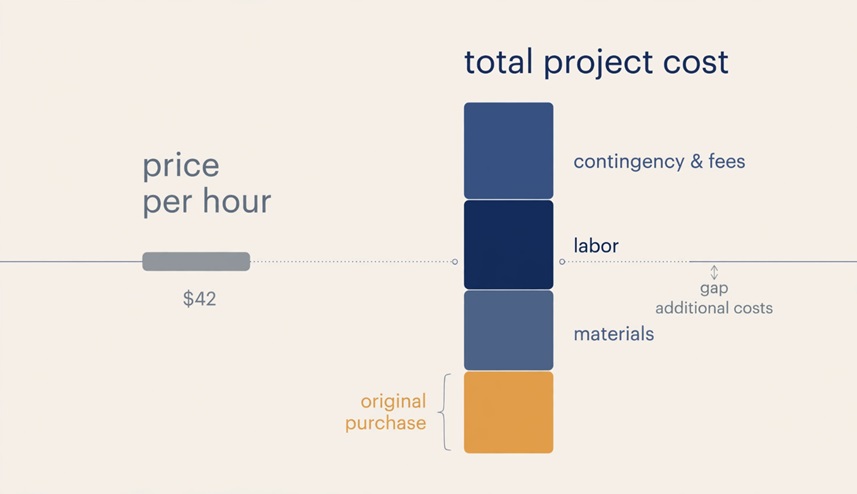
Finance compares prices. Your job is to make finance compare totals. Put this table in front of them.
| Cost line | Cheap or scraped corpus | Verified collection |
| Purchase price | Low, wins the meeting | Higher per hour |
| QC and annotation fixes | Paid after failure | Included upfront |
| Second collection cycle | Likely | Rare |
| Launch timeline | Slips per cycle | Holds |
| Consent and provenance | Unclear, carries risk | Documented |
| Total project cost | Low sticker, high total | Higher sticker, lower total |
Then borrow this script for the budget request. We compared speech data options on total project cost rather than rate per hour. The cheaper corpus carries a high probability of a second paid collection cycle plus launch delay, based on documented accent and consent gaps. The verified option costs more upfront and removes both risks, so we recommend it.
And a dose of honesty, because cheap data is sometimes fine. Prototyping in one majority accent? Internal demo? Grab a public corpus and move. The line sits where paying customers in more than one language or accent group touch the model. Cross that line and verified collection stops being a premium. Measured across the whole project, it becomes the cheap option. Planning data for models beyond speech follows the same logic, and the Humyn Labs multimodal dataset guide applies this thinking across data types.
Frequently Asked Questions
What happens when ASR training data is low quality?
Error rates rise for every speaker group the data underrepresents, and the damage concentrates on accents, noisy environments, and mixed language speech. Users experience repeated misrecognition, stop trusting the feature, and churn. The model itself often plateaus in ways teams misdiagnose as architecture problems.
How much does bad speech data cost an AI project?
Plan for two to four times the purchase price once you add gap analysis, a second collection round, fresh annotation, retraining, and delayed launch. Verified multilingual speech data collection services cost more per hour upfront and usually less across the full project because they remove the repeat cycle.
Why do multilingual speech models fail after launch?
Three gaps do most of the damage. Training audio skews to majority accents, sessions record one language at a time so code switching never appears, and clean recording conditions fail to match noisy production environments. Each gap alone raises errors. Together they compound.
Is free public speech data enough to train a production ASR model?
Public corpora work well for prototypes and benchmarks. A public asr dataset rarely covers your accents, environments, and mixed speech in production proportions, and licensing plus consent terms often exclude commercial use. Most production teams start publicly, then commission targeted collection for the gaps.
How do you pick a reliable speech data provider?
Ask for the rate split across collection, review, and consent, then ask for per speaker consent records. Providers built on a verified first-party contributor network, such as Humyn Labs, answer both in a day. Resellers of scraped audio cannot, and that difference predicts your total cost.
What does a second speech data collection cycle cost?
A repeat cycle repeats nearly everything: sourcing, recording, annotation, quality review, retraining, and full evaluation, plus the calendar weeks each stage consumes. Teams routinely find the repair round costs as much as the original program, which is why the cheapest reliable path is one well specified cycle.
The Two Quotes, Read Again
Go back to that procurement meeting. Same table, same two quotes. But now you can see the four bills stapled behind the cheap one: accuracy, rework, launch, compliance. You are not choosing a price. You are choosing how many times you pay it. Buy a verified multilingual speech data pipeline that verifies speakers, quotas accents, records real conditions, and documents consent, and you pay once.
When you are ready to price a real program, Humyn Labs’ voice data pipeline covers scoping, languages, and delivery specs, or reach the team directly at Humyn Labs. Bring your language list. We will bring the ledger.
